Third Carrier Heads East: Trump’s Quiet Signal That the Next Round Starts After the Votes
By: Marcus Sterling – SeaPRwire – The third carrier is already at sea and the calendar is the real weapon. Trump turned down Tehran’s seven-day offer in plain language. Officials now say the next bombs could fall in November, once the midterms are finished. That is not a rumor floating in the Gulf. It is the sequence the White House has drawn for itself.
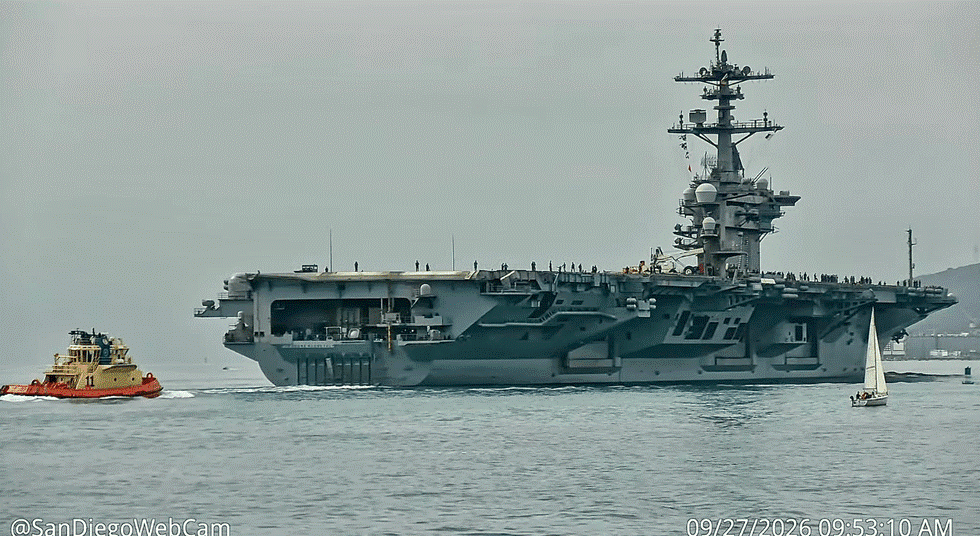
Official accounts list the movements with clinical detail. The Theodore Roosevelt left San Diego on 27 September for a long deployment into Central Command waters. The Makin Island amphibious ready group sailed the next day with the 13th Marine Expeditionary Unit aboard. Two carriers, the George H.W. Bush and the George Washington, are already on station. If the Roosevelt arrives and the Washington stays, the United States will field three carrier strike groups in the same theater for the first time since April. Roughly nine to ten thousand additional sailors and Marines are expected by the end of November. More than fifty thousand American troops are already in the region. The Boxer amphibious group has ships operating nearby. The Navy has kept about twenty vessels on station for months, enforcing the maritime quarantine and escorting commercial traffic through the Strait of Hormuz. Defense Secretary Hegseth has extended deployments for air-defense batteries and elements of the 82nd Airborne. Ammunition stocks are being topped up; one recent contract for AMRAAM missiles runs as high as 20.7 billion dollars. These are the hard numbers released by officials and confirmed in open reporting.
The same officials also map the political clock. Iran’s foreign minister presented a proposal through intermediaries on 25 September. Tehran offered to reopen the Strait of Hormuz on day seven and restart nuclear talks if Washington lifted the port blockade, eased oil sanctions, released frozen assets, and extended any ceasefire to other regional fighting. Trump rejected the terms as unacceptable. He told aides he expects to resume strikes after the 3 November midterms. Asked later by Time magazine whether he might expand the campaign once the votes are counted, he answered simply, “Possible.” Iranian commanders have answered in kind. The army chief called the moment critical and decisive. He said Iran will not tolerate a situation in which its own trade is blocked while others sail freely through the Strait. Military spokesmen warned that any new American attack would draw a sharper response, and forces linked to Tehran in Lebanon, Yemen, and Iraq have been told to prepare. Missile launches against U.S. ships and American strikes on Iranian-linked vessels have continued through September. The operational tempo is already grinding the fleet. Some carriers are looking at seven- or eight-month deployments, levels last seen after the Cold War. The chief of naval operations has admitted the strain is obvious.
The pattern is familiar and deliberate. Build the force first. Let the election pass. Keep the decision window open. Three carriers give options that two do not: sustained air sorties, tighter sea control, and the ability to absorb losses without immediately thinning the line. The amphibious ships add the possibility of limited shore pressure if needed. None of this guarantees the order will be given. It does mean the tools will be in place when the political calendar clears. The Strait remains the pressure point both sides keep touching. Each new ship that arrives raises the cost of miscalculation for everyone in the water. The next move belongs to the man who already said the date is after the votes.
Author bio: Marcus Sterling, a veteran geopolitical columnist who has covered Middle East power shifts for major international papers for more than two decades.
source https://newsroom.seaprwire.com/contributors/marcus-sterling/third-carrier-heads-east-trumps-quiet-signal-that-the-next-round-starts-after-the-votes/