Nature Just Handed Ten Startups the Playbook—Most Climate Tech Still Ignores It
By: Alex Mercer – SeaPRwire – Founders keep asking how to fix climate problems with more tech and more capital. The better question is how nature already solved the same constraints over 3.8 billion years. Most climate startups still build around scarcity and force. The Ray of Hope Accelerator just selected ten teams that start from the opposite end. They treat living systems as the operating manual, not the backdrop. That shift is the real signal.
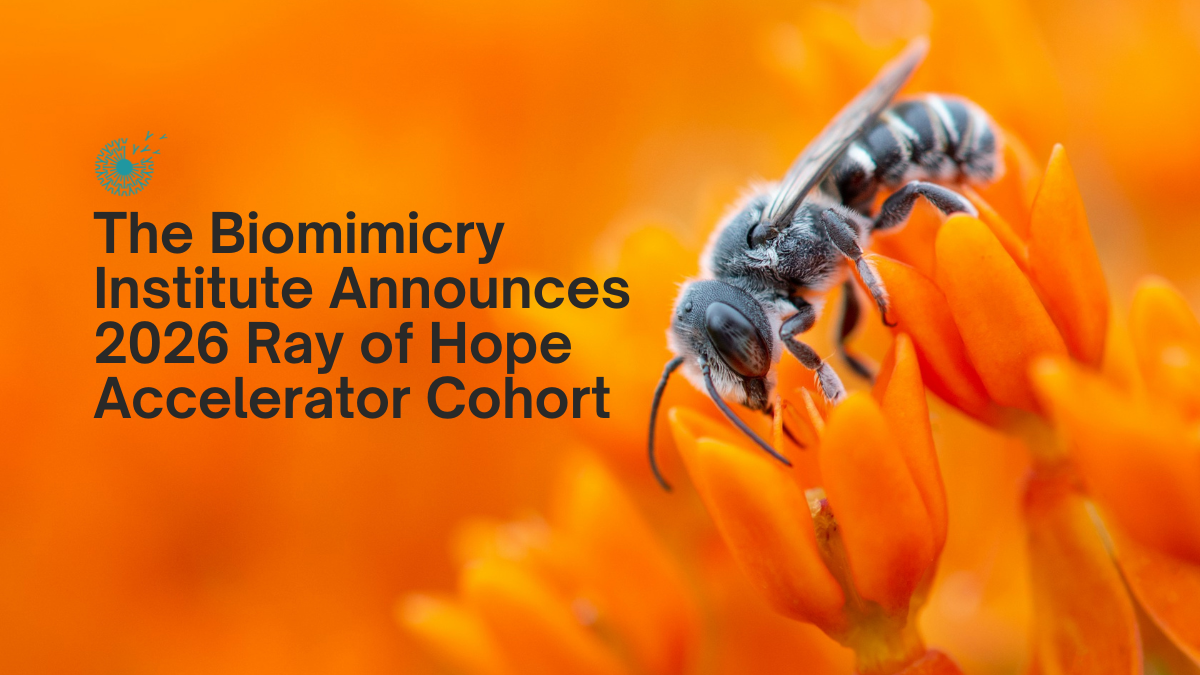
The Biomimicry Institute, a nonprofit built to create a nature-positive and regenerative world, announced the 2026 cohort of its Ray of Hope Accelerator. This is the program’s seventh year. It remains one of the leading efforts supporting nature-inspired entrepreneurs at the intersection of biomimicry, climate, and innovation. Each of the ten startups receives $15,000 in non-dilutive funding. They also gain access to more than $50,000 in resources and expert support. The program includes a Nature Retreat and mentorship from leaders in science, deep tech, entrepreneurship, and impact investing. CEO Amanda Sturgeon described the cohort as proof of what happens when founders stop asking how to fix a problem and start asking how nature would solve it. She said these ten startups learn from the living world rigorously and humbly. They build solutions with potential to reshape industries. A 20-member Selection Committee spanning science, deep tech, entrepreneurship, and investing evaluated the global applicant pool. Their role is to keep the accelerator rigorous and focused on ventures with both scientific credibility and real-world potential. The official list covers a wide range of applications. BioWraptor in the United States uses tardigrade-inspired synthetic peptides to protect perishable biomolecules from heat and degradation. That approach aims to eliminate expensive cold-chain logistics. DisperseBio in Israel redefines biofilm and biofouling control with biomimetic peptides. Its technology targets more than $100 billion in annual industrial and maritime damage by activating microbes’ natural dispersal pathways instead of toxic biocides. Fungi Life Corporation in Colombia leverages a cell-free formula that copies the biochemical strategy fungi use to emulsify and break down complex hydrocarbons. The method accelerates oil-spill and soil remediation without introducing live microbes. Mireta Urban Dynamics in the United States translates the 500-million-year-old network intelligence of slime molds into generative design algorithms. Planners can use them to build resilient and resource-efficient city infrastructure. PhysaFlow in the United States offers an edge-native AI platform that applies the universal design principles of biological flow networks. It targets the estimated 30 to 40 percent of AI data-center capacity currently stranded. The system reduces power, cooling, and water use while increasing workload capacity inside existing infrastructure. Renovenergy in Colombia develops cost-effective green-hydrogen electrolyzers with bioinspired silicon electrodes. The electrodes draw on the nanoscale geometry of mitochondria to achieve high electron-transfer efficiency without scarce precious metals. Semion in the United States restores natural plant defense mechanisms lost during domestication. Instead of targeting pests or genetically modifying crops, the company activates the plants’ own immune responses so crops can repel pests, attract natural enemies, and resist disease. Terrament in the United States builds underground gravity storage inside existing mines. A patented cable-free conveyance system inspired by the metachronal wave motion of caterpillars supports massive payloads across extreme vertical drops. WAVR Technologies in the United States creates atmospheric water-harvesting technology modeled on the Australian tree frog’s ability to extract water from air. The goal is water resilience for resource-constrained industries. Xatoms in Canada uses proprietary AI and quantum chemistry to design visible-light-activated photocatalysts that mirror the solar-powered chemistry of photosynthesis. The catalysts destroy persistent water contaminants without chemicals or toxic byproducts. Tak Sing Wong, a 2020 Ray of Hope participant and current Biomimicry Institute board member, noted the strength of the science, the clarity of impact potential, and the thoughtful translation of nature-inspired ideas into scalable solutions. The program has already supported more than 60 startups across six prior cohorts. Keystone partner The Ray C. Anderson Foundation and the EcoShift Collective continue to underwrite it. The Institute itself was founded by Janine Benyus in 2005 as a 501(c)(3) organization. Its mission is to spread the practice of looking to solutions developed by living organisms over billions of years.
The official announcement frames the cohort as an invitation to investors, partners, mentors, and advocates. The subtext is different. Conventional climate tech still leans on material intensity, energy intensity, and regulatory push. These ten teams start from biological efficiency already proven at planetary scale. Cold-chain elimination removes infrastructure cost and carbon at the same time. Biofouling control without biocides cuts both damage and toxicity. Gravity storage inside existing mines avoids new land use and new material demand. Plant immune activation reduces the chemical load on agriculture without genetic modification. Each approach converts a natural constraint into an operating advantage. The industry potential sits in the gap between what nature already does and what current industrial systems still force. That gap is where the real leverage lives. The accelerator’s non-dilutive capital and expert network give the teams runway to prove the translation works at commercial scale. Investors watching the space should treat the cohort less as a list of interesting science projects and more as early signals of which industrial processes can be redesigned around biological principles rather than brute force. The next practical step is simple. Track which of these ten close their first commercial pilots and which industrial partners show up as early customers. That data will separate the nature-inspired claims from the nature-inspired results.
Author bio: Alex Mercer, technical director and geek analyst with deep experience inside major Silicon Valley engineering organizations focused on deep-tech systems.
source https://newsroom.seaprwire.com/press-releases/technologies/nature-just-handed-ten-startups-the-playbook-most-climate-tech-still-ignores-it/